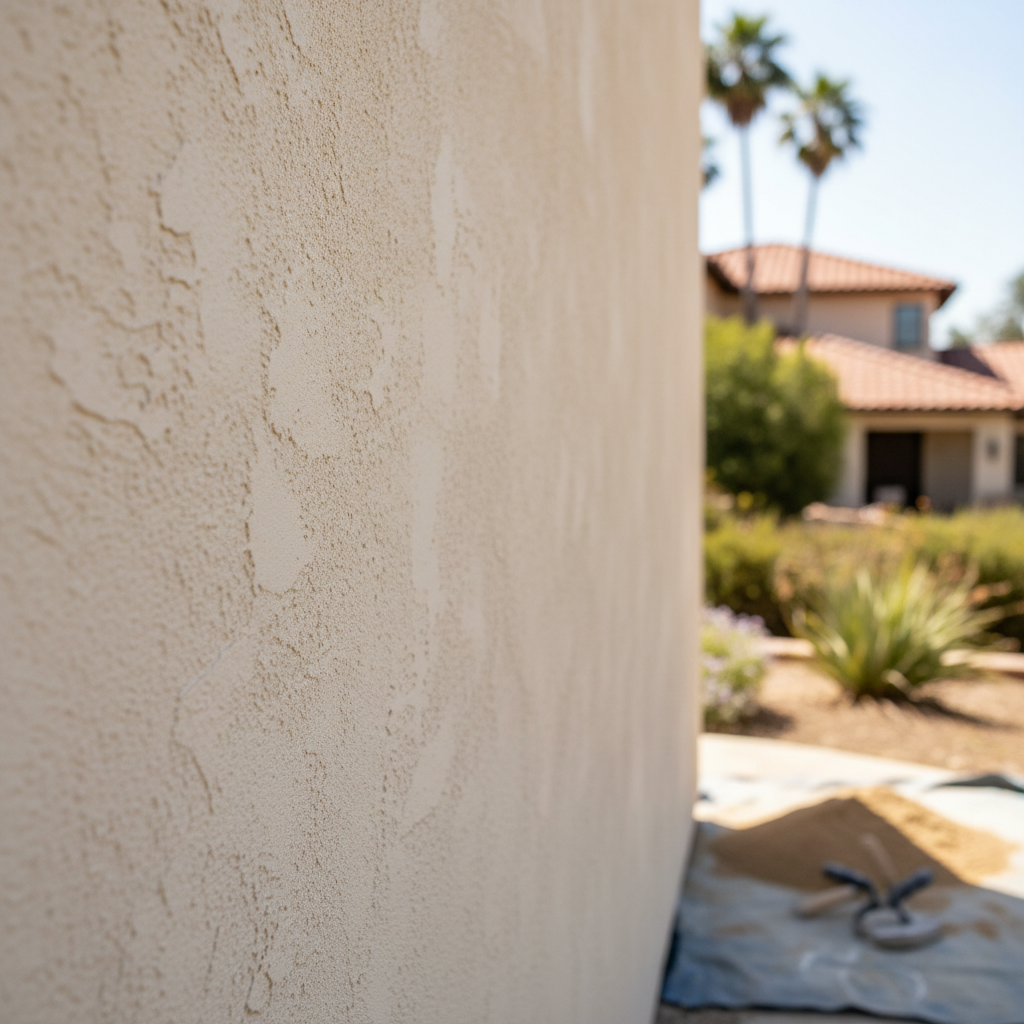
What exactly is stucco redashing, and how is it different from a new stucco application?
Okay, let's clear this up right away. When we talk about redashing stucco, we're essentially giving your existing stucco a fresh, new top coat. Think of it like repainting a wall, but instead of paint, we're applying a thin layer of new stucco finish. We don't tear off the old stuff down to the lath. We prepare the existing stucco surface, make sure it's sound, and then apply a new finish coat right over it.
A new stucco application, on the other hand, is a complete build-up from scratch. That means installing a weather-resistant barrier, lath, scratch coat, brown coat, and then the finish coat. It's a much more involved process, usually done on new construction or when the existing stucco is so damaged it needs to be completely removed and replaced. Redashing is a great way to refresh your home's look, change its color, or repair minor surface issues without the major demolition and expense of a full replacement.
How long does a redash typically last in our Beverly Hills climate?
That's a smart question, especially with our unique weather here. A properly applied stucco redash, using quality materials, should easily last you 15 to 25 years, sometimes even longer. Now, that's assuming a few things: it was applied correctly, you're not getting constant, direct impact damage, and you're doing basic maintenance like keeping sprinklers from constantly hitting the wall. Our Beverly Hills climate is actually pretty good for stucco. We don't have extreme humidity like Florida, nor the brutal freeze-thaw cycles you see in colder states. The biggest challenge can be intense sun exposure on south-facing walls, which can accelerate fading, but the structural integrity of the redash itself holds up really well.
What's the typical cost range for redashing a home in Beverly Hills, and what factors influence it?
Alright, let's talk numbers. This is one of the first things everyone asks, and it's tough to give a one-size-fits-all answer without seeing your home. Generally, for a standard redash, you're looking at anywhere from $4 to $8 per square foot of wall surface. Now, that's a pretty wide range, right? Here's what drives that price:
- Size of your home: Bigger homes, more square footage, more material, more labor. Simple math.
- Condition of existing stucco: If your old stucco has a lot of cracks, delamination, or needs extensive repairs before we can even think about redashing, that's going to add to the prep work and cost.
- Type of finish: A smooth finish is generally more labor-intensive and therefore pricier than a sand finish or a medium texture.
- Accessibility: If we need extensive scaffolding because your home has multiple stories, steep slopes, or tricky architectural features (like those beautiful, intricate details you see in some Mediterranean-style homes in the Flats), that adds time and equipment costs.
- Color choice: Believe it or not, some darker or more vibrant colors require more pigment and can sometimes be a bit more expensive.
- Material quality: We only use top-grade materials at Beverly Hills Stucco & Plastering, but there are always different tiers of products out there. Quality costs a little more upfront but saves you big in the long run.
The best way to get an accurate estimate is to have us come out and take a look. We'll give you a detailed breakdown.
Do I need to remove all my landscaping or outdoor fixtures before you start?
You don't need to remove *everything*, but a little preparation on your end goes a long way and helps us work more efficiently. We'll protect your landscaping, windows, doors, and anything else that's staying put. However, if you have things like trellises, decorative wall sconces, downspouts, or anything else that's directly attached to the stucco and can be easily removed, it's a good idea to take them down yourself. This allows us to get a clean, continuous finish without having to cut around obstacles, which can sometimes lead to visible seams or less durable spots. We'll discuss this during our initial walkthrough, so you'll know exactly what we recommend for your specific property.
Can a redash fix existing stucco cracks or water intrusion issues?
This is a critical point. A redash can definitely help with minor, hairline cracks and improve the overall appearance of your stucco. We'll usually fill and patch those smaller imperfections during the prep phase. However, if you have significant structural cracks – the kind that are wide, long, or appear in a pattern that suggests movement – a redash isn't a magic bullet. Those cracks often indicate underlying issues, like foundation settlement or framing problems, and simply covering them up won't solve the root cause. They'll likely reappear in the new finish.
As for water intrusion, a redash is *not* a waterproofing solution on its own. If you're experiencing leaks or moisture problems, we need to address those first. That might involve repairing flashing, sealing penetrations, or even investigating the wall assembly. A redash provides a new, durable surface, but it's not designed to stop water that's already finding its way in through deeper structural flaws. We'll always inspect for these issues before recommending a redash, because patching over a problem just creates a bigger headache down the road.
How long does the redashing process take, from start to finish?
The timeline really depends on the size of your home and the complexity of the job, but for an average-sized Beverly Hills home, you're usually looking at about 3 to 7 days of actual work on site. This includes the prep work, any minor repairs, application of the new finish coat, and cleanup. Weather plays a role too; we can't apply stucco in heavy rain or extreme cold (though that's rare here). We'll give you a clear schedule once we've assessed your project, and we always aim to minimize disruption to your daily life. We want to get in, do a fantastic job, and get out so you can enjoy your refreshed home.
What kind of maintenance does a redashed stucco surface require?
One of the best things about stucco, especially a fresh redash, is how low-maintenance it is. You're not going to be painting it every few years. Generally, all you need to do is keep it clean. A gentle washing with a garden hose and a soft brush can remove dirt, dust, and cobwebs. For tougher spots, a mild detergent and water mixture usually does the trick. Avoid high-pressure washers, as they can damage the stucco surface, especially if used too close or with too much force. Also, keep an eye on your sprinklers; direct, constant water hitting the same spot can lead to discoloration or even erosion over time. If you notice any small cracks developing after a few years, it's a good idea to have them looked at and sealed to prevent water intrusion. That's about it – pretty simple, right?