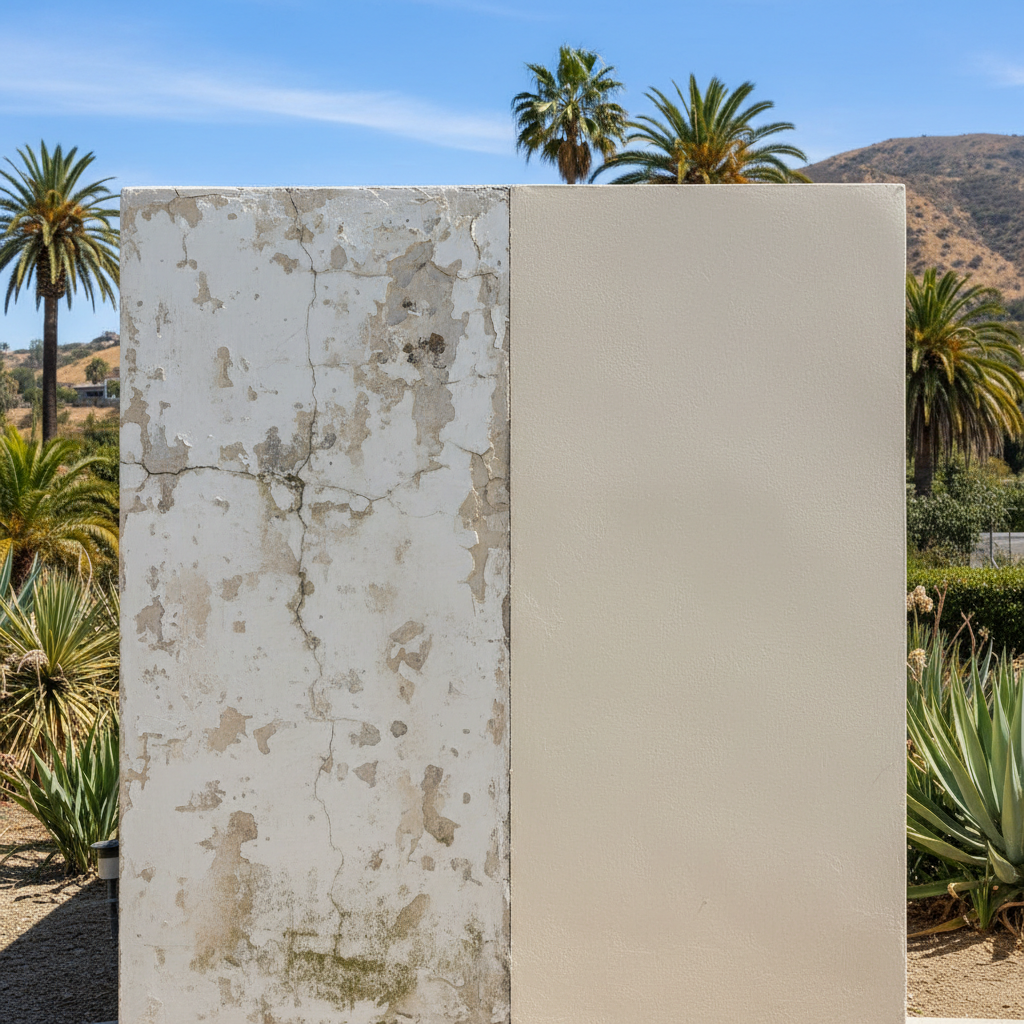
Beverly Hills Stucco & Plastering sees homeowners dealing with exterior wall cracks every single week across the Flats and up into Trousdale Estates. Choosing between a complete stucco tear-out and overcladding your existing surface is a major decision. These two approaches compare very differently when you factor in the local climate, construction styles, and your money.
What Overcladding Really Means
Overcladding means putting a fresh layer of stucco or an acrylic finish right over your existing walls. Sometimes wire mesh goes up first, or sometimes it bonds straight to a sound base coat. You avoid the massive mess of chipping off three coats of old cement down to the wood framing or concrete block.
The biggest draw here is the price tag and the speed. You spend less on labor because nobody is hauling tons of heavy debris away in dumpsters. If your underlying frame is completely solid and the current stucco is not actively failing or holding trapped moisture, overcladding can give you a sharp new look without blowing your entire renovation budget.
Why Full Replacement Wins on Longevity
Full stucco replacement is messy, loud, and disruptive. Beverly Hills Stucco & Plastering strips everything down to the studs or lath, inspects the framing for dry rot or termite damage, installs a modern weather-resistive barrier, and builds a brand-new three-coat system from scratch. It is a heavier lift by a wide margin.
Here in Southern California, temperature swings and dry seismic shifts put stress on exterior walls. If your old system has underlying cracks, rust on the metal lath, or compromised flashing, putting a new layer on top is just hiding a ticking time bomb. When we do a full tear-out at Beverly Hills Stucco & Plastering, we fix the root cause of wall failures rather than putting a cosmetic bandage on a deeper wound.
Cost and Maintenance Realities
Upfront costs favor overcladding every single time. You save thousands on demolition labor and disposal fees. But you have to look at the math over ten or fifteen years.
- Overcladding costs less today, but if moisture gets trapped behind that extra layer, you will be paying for repairs much sooner.
- Full replacement costs more on day one, but it resets the lifespan of your exterior back to zero, giving you decades of high performance.
- Maintenance depends heavily on the finish coat you choose, and traditional cement requires less chemical washing than some synthetic alternatives.
The Beverly Hills Factor
Our local soil conditions and microclimates matter. Homes sitting closer to the canyons deal with morning moisture and shifting earth, while properties down in the flatlands face intense sun exposure all afternoon. If your home has historical architectural details or complex pop-outs, overcladding can sometimes bury those crisp lines and make the details look rounded or muddy.
My Recommendation
If your existing stucco is structurally sound, free of deep moisture issues, and you simply want to update a dated color or texture, overcladding can be a smart, budget-friendly route. But if you have persistent cracking, hollow-sounding spots where the stucco has delaminated from the wall, or known moisture leaks around your windows, do it right. Beverly Hills Stucco & Plastering strips it down, fixes what is broken underneath, and installs a fresh three-coat system that will protect your home for the next thirty years.