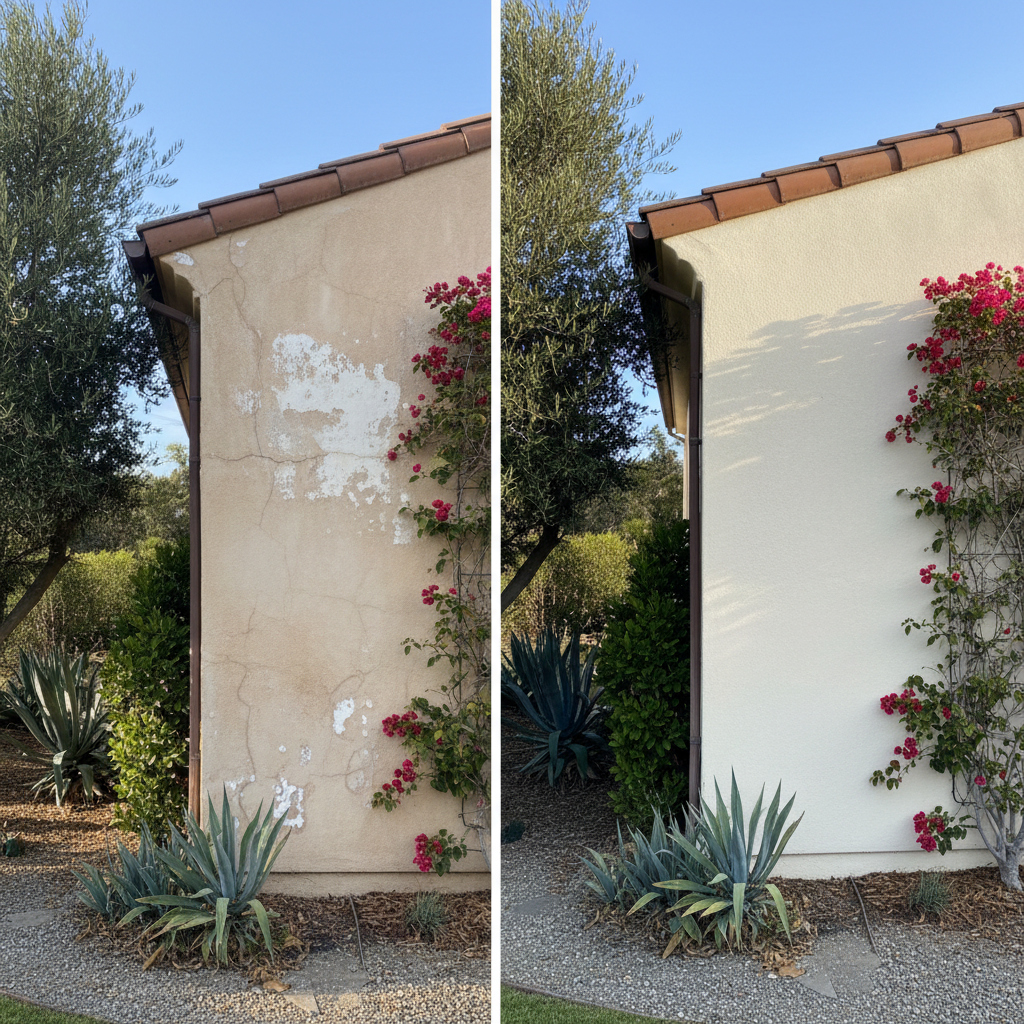
Your stucco's looking a bit rough, huh? Cracks, peeling paint, maybe even some water stains you just can't ignore anymore. It happens, especially with our older homes here in Beverly Hills; that stucco might be decades old and has definitely seen its share of sun, rain, and yeah, even a few tremors. When it's time to replace it, you're usually looking at two main options: a full tear-off down to the sheathing, or an overlay right on top of what's already there. Both have their place, but one's usually a better bet for most homeowners, in my experience.
Full Tear-Off: The Gold Standard (But Not Always What You Need)
This is exactly what it sounds like. We strip everything off – all the old stucco, the lath, the paper, right down to the bare sheathing or framing. Then, we build it back up from scratch with new building paper, fresh metal lath, and a brand-new three-coat stucco system. Think of it like giving your house a whole new skin.
Pros of a Full Tear-Off:
- Finds Hidden Problems: This is the big one, honestly. When you tear off the old stucco, you expose the sheathing and framing underneath. That means we can find and fix any hidden water damage, rot, or structural issues that might be lurking. I've seen plenty of homes in the flats of Beverly Hills where water has been seeping in for years, and you'd never know until that old stucco comes off.
- Longest Lasting Solution: By starting fresh, you're getting a complete, properly installed system designed to last for decades. You're not relying on the integrity of the old stuff at all.
- Best for Major Damage: If your existing stucco is riddled with deep cracks, delamination, or has significant moisture intrusion, a tear-off is almost always the only way to go. Trying to patch over major problems? That's just asking for trouble down the road.
- Better Drainage: A new installation ensures a proper drainage plane behind the stucco, which is super important for keeping water out, especially with our occasional heavy rains.
Cons of a Full Tear-Off:
- Higher Cost: No surprise here, right? More labor, more material removal, more disposal fees. It's the most expensive option upfront.
- More Invasive: It's a messier, longer process. Your home will be a construction zone for a bit longer, and there's definitely more dust and disruption.
Stucco Overlay (Re-Stucco): Good for the Right Situation
An overlay, sometimes called a re-stucco or skim coat, means we apply a new layer of stucco directly over your existing, sound stucco. We usually prep the surface by cleaning it thoroughly, applying a bonding agent, and sometimes adding a fiberglass mesh for extra strength before putting down the new finish coat.
Pros of an Overlay:
- Lower Cost: Generally, an overlay is significantly cheaper than a full tear-off. Less demolition, less material to haul away, less labor involved.
- Faster Installation: The job gets done quicker since we're not tearing everything down.
- Less Disruptive: Less noise, less dust, and a shorter construction period means less headache for you and your neighbors.
- Good for Cosmetic Upgrades: If your existing stucco is structurally sound but just looks tired, faded, or has minor surface cracks, an overlay can give your home a beautiful, fresh new look without the expense of a full tear-off.
Cons of an Overlay:
- Doesn't Address Hidden Problems: This is the biggest drawback. You're covering up the old stucco. If there's water damage, rot, or structural issues underneath, an overlay won't fix them. In fact, it could trap moisture and make existing problems worse.
- Limited Durability: While a good overlay can last a long time, it's generally not as tough or long-lasting as a brand-new, full three-coat system installed from scratch. Its longevity really depends on the condition of the existing stucco it's applied over.
- Adds Weight: You're adding another layer of material to your home. While usually not an issue for most structures, it's something to keep in mind.
- Can Show Old Imperfections: If the existing stucco has significant imperfections or movement, these can sometimes show through the new overlay over time.
My Recommendation for Beverly Hills Homeowners
Look, I've been doing this for a long time at Beverly Hills Stucco & Plastering, and I've truly seen it all. For most homes in Beverly Hills, especially those built before the 1980s, I usually lean towards a full tear-off if the budget allows and if there's any suspicion of underlying issues. Why? Because our homes are valuable, and protecting that investment means doing the job right the first time.
However, an overlay is a perfectly viable and cost-effective option under specific conditions:
- Your existing stucco is in generally good, solid condition with no major cracking, delamination, or signs of water intrusion.
- You're primarily looking for a cosmetic refresh or a change in texture/color.
- A thorough inspection by a qualified professional confirms there are no hidden issues that would be exacerbated by an overlay.
Before you decide, get a professional inspection. We'll check for moisture, tap for hollow spots, and look for signs of structural movement. Don't let someone just slap new stucco over old problems; it'll cost you more in the long run. We'll give you an honest assessment of what your home needs to keep looking great and staying protected for years to come.